
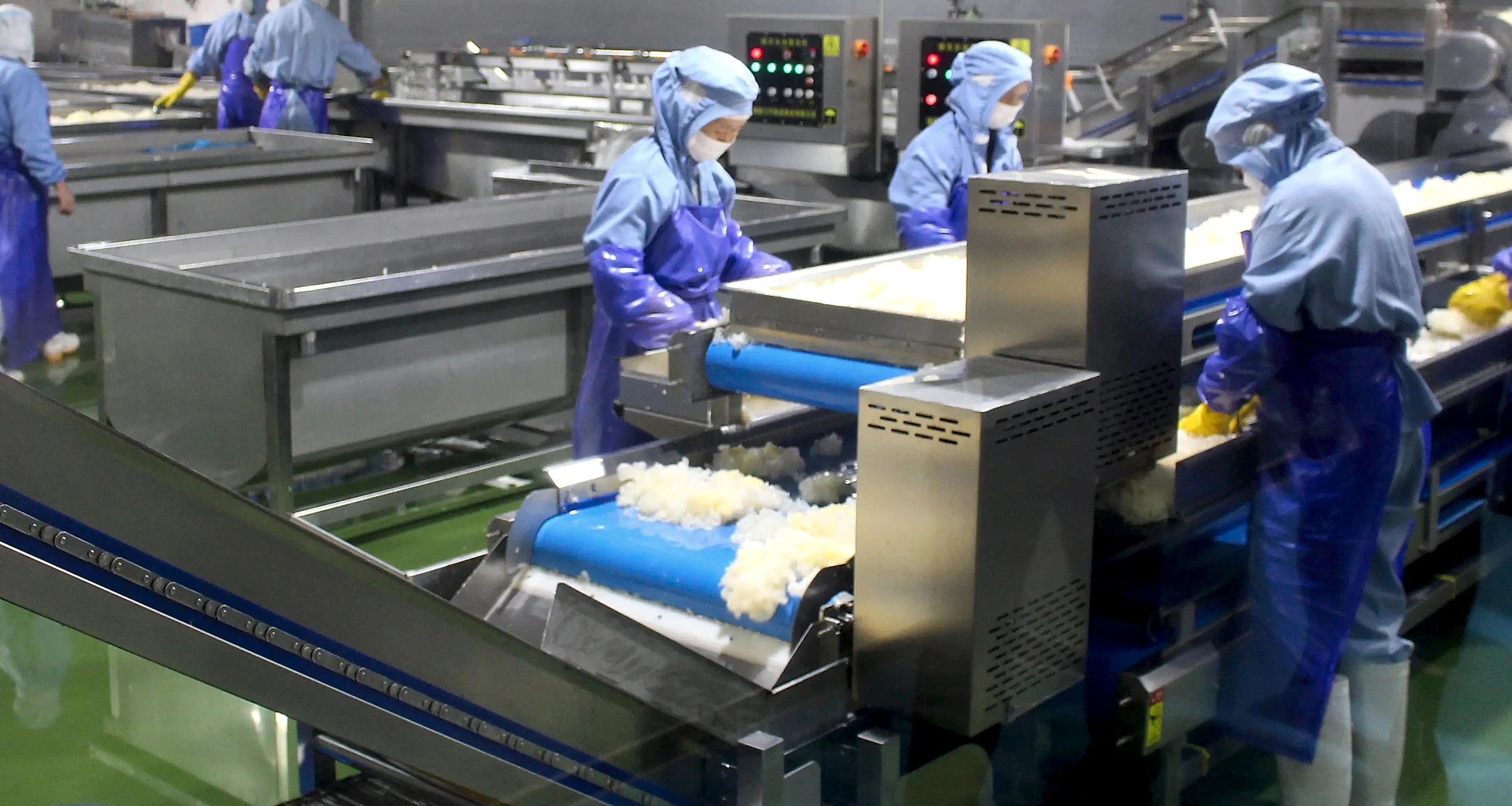
Why food processing lines use connected equipment
Modern seafood, fruit and vegetable plants rarely depend on one machine alone. Washing, conveying, dewatering, blanching, freezing and drying stages must work together so that product flow remains stable from the raw material inlet to packing.
The right equipment combination depends on the product, capacity, moisture condition, target temperature and available factory space. A line should therefore be reviewed as a process rather than as a list of unrelated machines.
Main machine groups in a processing plant
Preparation equipment can include bubble washers, elevators, air dryers, blanchers, cooling systems and vibratory dewatering machines. These stages help remove soil, control product temperature and create a more consistent feed for the next operation.
Freezing equipment may include fluidized bed IQF freezers, tunnel IQF freezers, spiral freezers and plate freezers. Drying equipment can include hot air dryers, tunnel dryers, cold air dryers and freeze dryers. The best choice depends on product shape, moisture, residence time and the required final quality.
How to match equipment to product flow
Product transfer direction, belt width and discharge height should be checked between every stage. If one machine supplies product faster than the next machine can accept it, accumulation and uneven loading may reduce the performance of the whole line.
For seafood, washing, grading, cooking or cooling may come before freezing or packing. For vegetables and fruit, cutting, blanching, cooling and dewatering may be required before IQF freezing.
What to prepare before requesting a proposal
With the product, capacity, temperatures, process stages and factory conditions clearly defined, an equipment supplier can recommend a practical combination of machines instead of a generic catalog configuration.
- Product name and condition
- Required hourly output
- Product dimensions and moisture condition
- Inlet and target outlet temperatures
- Upstream and downstream process stages
- Available factory dimensions and product flow direction
Need help matching the equipment?
Share your product, capacity and target process. Our team can suggest the next technical step.
Send an inquiry