
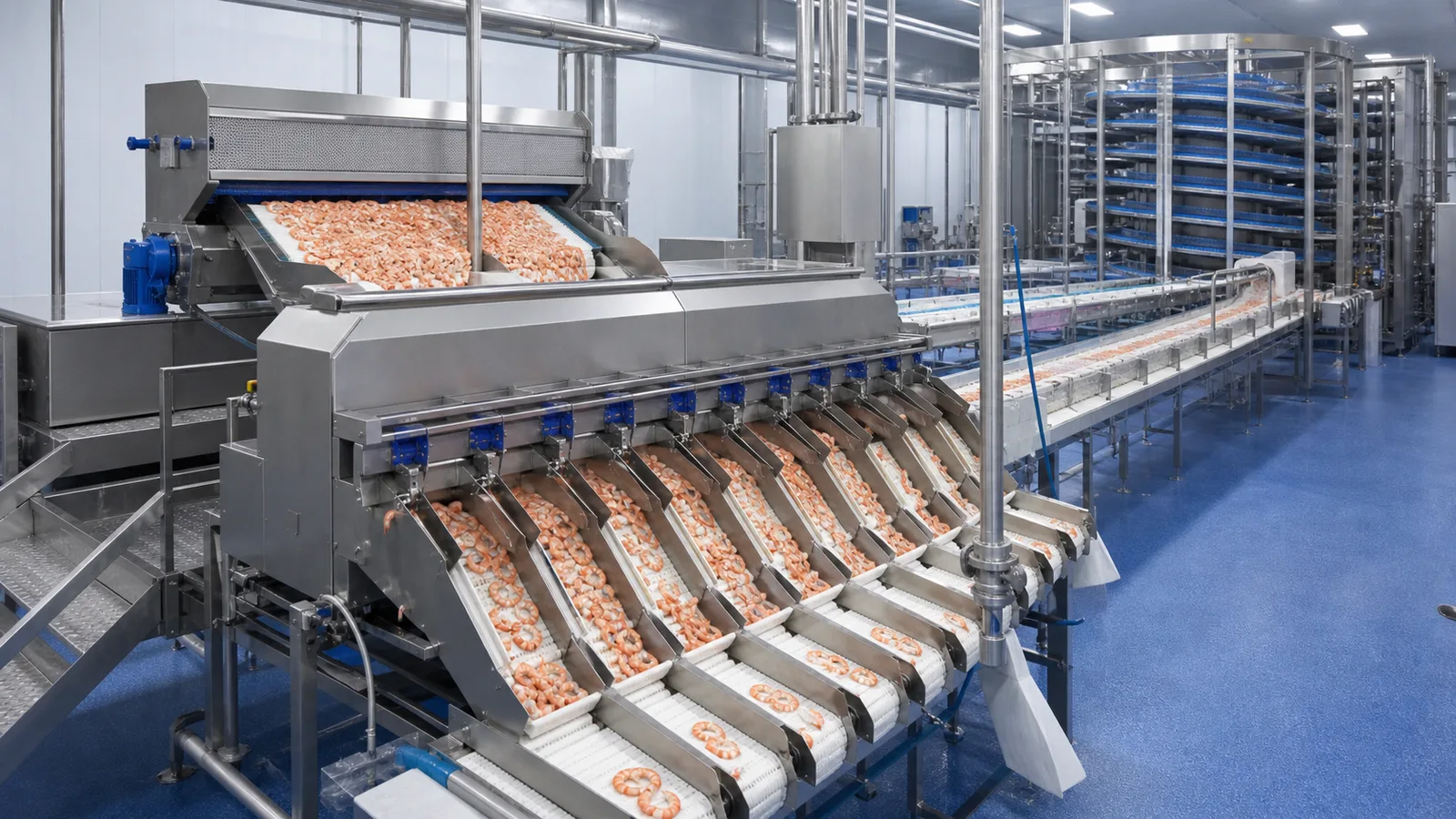
Why cleaning affects grading performance
A shrimp grading machine works with frequent product contact and regular water exposure. A consistent cleaning routine helps protect food hygiene, maintain smooth product movement and reduce the risk of residue affecting the grading result. Cleaning should be planned as part of the daily production schedule rather than treated as an occasional repair task.
Clean the product-contact areas first
After production, remove remaining shrimp and food particles from the feed area, rollers, collection outlets and transfer conveyors. Rinse away loose material before applying the approved cleaning procedure used by the factory. Pay special attention to corners, guards and areas where water or product may collect.
Inspect rollers and grading outlets
Roller spacing and outlet condition influence how shrimp are separated by size. Check that rollers rotate smoothly, that no foreign material is trapped between contact parts and that each outlet remains clear. If a roller becomes damaged or difficult to rotate, continued operation may cause unstable feeding or product damage.
See our shrimp grading machine product page for the equipment application and configuration scope.
Keep the surrounding line easy to access
The grader should have enough space for operators to wash, inspect and service the machine without disturbing adjacent equipment. In a cooked shrimp process, this may include washing, cooking, ambient-water pre-cooling, ice-water pre-cooling, selection conveying, grading and IQF freezing. A practical layout improves both sanitation and maintenance efficiency.
Read the cooked prawn freezing production line page for a representative equipment arrangement.
Maintenance checks before restarting
- Confirm the product-contact surfaces are clean and free of residue.
- Check roller movement, guards, fasteners and collection outlets.
- Inspect conveyor belts and transfer points for abnormal wear.
- Verify water drainage and surrounding floor conditions.
- Run a short empty test before feeding product again.
Prepare the right information for service
When requesting technical support, provide the shrimp condition, product size range, working capacity, operating hours and a description of the issue. Photos of the feed section, rollers and outlet area can help the engineering team identify the next step more efficiently.
For a line review or maintenance question, use our contact page to send the process details.