
The basic difference between fluidized bed and tunnel freezing
Both fluidized bed and tunnel IQF freezers are used in continuous food freezing, but they handle product in different ways. A fluidized bed freezer uses controlled upward airflow to lift and separate relatively small free-flowing pieces. A tunnel freezer carries product through a longer freezing zone, often on a belt or through several levels, and may suit products with different shapes or loading characteristics.
The correct choice depends on the product and process target. Capacity is important, but it should be reviewed together with piece size, moisture, inlet temperature, outlet temperature, freezing time and available floor space.
When a fluidized bed freezer is a strong fit
A fluidized bed IQF freezer is often suitable for vegetables, berries, diced fruit, dates and other products that can be spread across a perforated belt. Controlled airflow helps individual pieces remain separated as they freeze. This can reduce sticking and clumping when the incoming product has been prepared and dewatered properly.
Freezing performance depends on stable loading. Product should enter the belt in a consistent layer rather than in irregular piles. The airflow and belt settings can then be adjusted for the product condition and target result. Visit our fluidized bed IQF freezer landing page for the equipment application and technical scope.
When a tunnel freezer may be more suitable
A tunnel freezer may be considered when the product requires a different belt arrangement, a longer residence path or a process that is less dependent on fluidization. Larger, irregular or more delicate products may require a different handling method. The decision should be based on trials, product characteristics and the layout of the complete factory.
In some projects, different freezer types may serve different products in the same facility. A technical review helps identify the practical arrangement instead of assuming that one freezer model fits every product.
Preparation equipment affects the final result
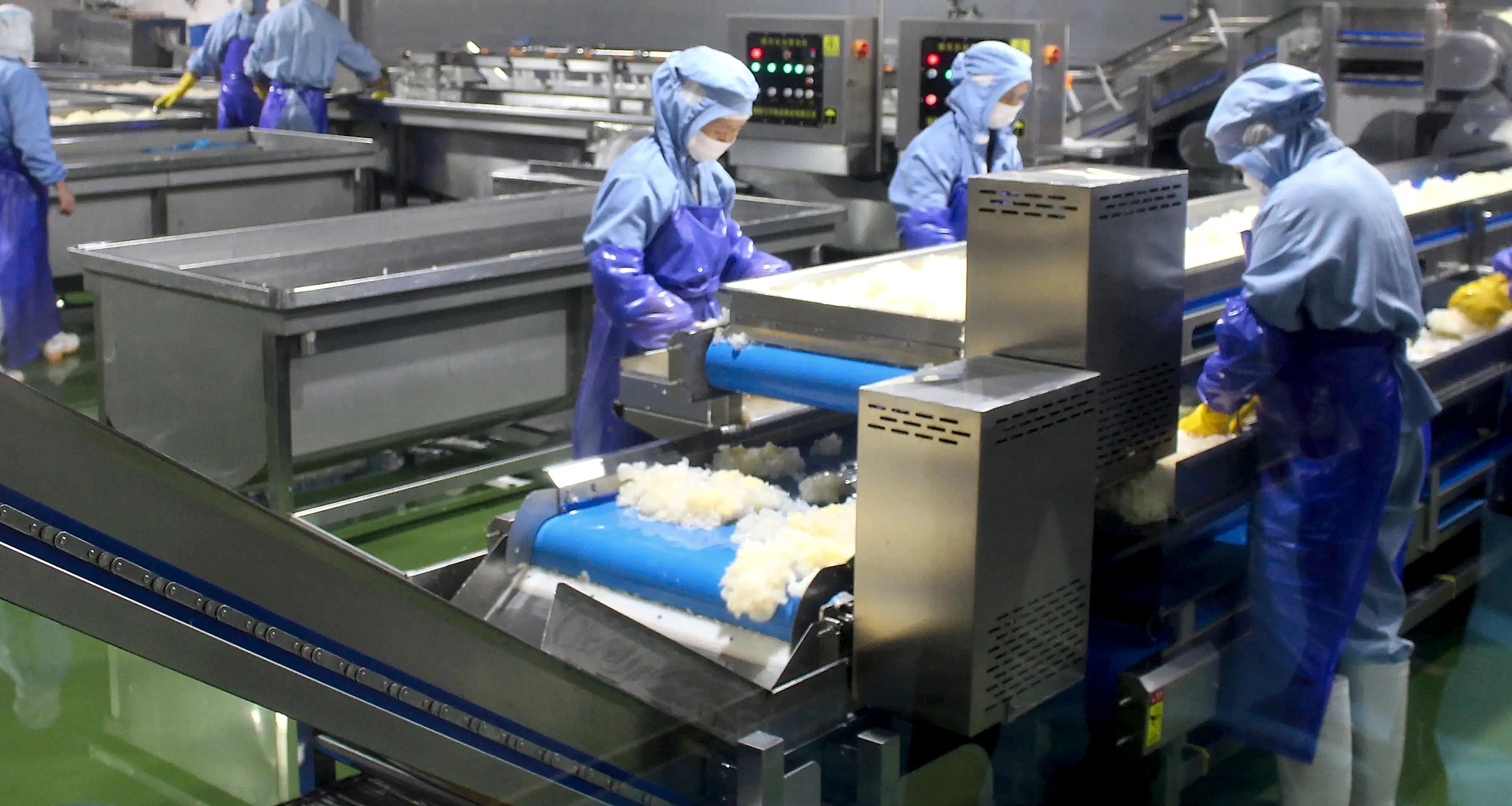
Freezer selection cannot be separated from upstream preparation. Washing, cutting, blanching, pre-cooling and dewatering influence product temperature, surface moisture and feeding stability. Excess water can increase sticking, while uneven pieces may require different residence times.
For fruit and vegetable lines, the preparation stages should be sized to supply the freezer continuously. The strawberry washing and freezing line example shows how washing, preparation, cooling, dewatering and fluidized bed freezing can be arranged as one process.
Capacity, freezing time and plant space
Capacity should be stated with the product and operating conditions. For example, the same machine may require different settings for sliced vegetables, berries and dates. Share the required hourly output, piece size, product inlet temperature and target outlet temperature so the freezing zone can be evaluated correctly.
Also confirm the available floor space, utility conditions, maintenance clearances and product flow direction. A compact layout may reduce transfer distance, but operators still need safe access for cleaning and inspection. The products page provides an overview of related processing equipment that may be included in the line.
Practical selection checklist
- Identify the product type, shape and piece size.
- Measure the expected surface moisture after preparation.
- Define hourly capacity for normal and peak production.
- Set inlet and outlet temperature targets.
- Confirm required freezing time and product residence.
- Review washing, blanching, cooling and dewatering stages.
- Check floor space, utilities and maintenance access.
These details give the engineering team a reliable basis for comparing fluidized bed and tunnel freezing options. For a project-specific recommendation, use our contact page to share the product and process information.
Frequently asked questions
Is a fluidized bed freezer only for vegetables?
No. It can also be used for suitable free-flowing fruit, berries, dates and some seafood products when the product condition and airflow requirements are appropriate.
Does a tunnel freezer always have a higher capacity?
Not necessarily. Capacity depends on the model, product, belt width, loading density and freezing conditions. A comparison should use the same process assumptions.
What should be tested before the final selection?
Product separation, freezing time, moisture condition, outlet temperature and the stability of the feeding layer should be reviewed under representative conditions.