
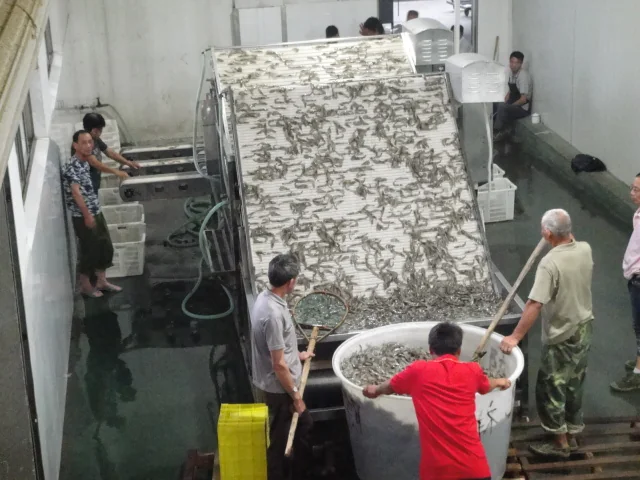
What does a shrimp grading machine do?
A shrimp grading machine separates mixed shrimp into defined size categories through configured roller gaps. The outputs can then move to dedicated inspection, freezing, packing or holding processes.
Consistent grading is a commercial requirement because seafood buyers often purchase to count-size specifications such as 16/20, 21/25 or 31/40.
How roller grading works
Shrimp enter through a receiving, washing or water-assisted feeding section before moving over rotating food-grade rollers. Smaller shrimp fall through earlier openings while larger shrimp travel farther before reaching a suitable gap.
The effective grading range depends on roller spacing, grading length, product feed uniformity and the number of discharge outlets. Overloading the infeed can reduce accuracy regardless of the machine model.
Key factors that determine the machine
Define the smallest and largest incoming shrimp, required hourly throughput, number of grade outputs and whether the raw material is fresh, chilled, cooked or thawed. A grader sized for one product range may not reliably cover a much wider distribution without reconfiguration.
Match grader throughput with the downstream IQF freezer and packing line so that product does not accumulate between stages.
- Shrimp size range and commercial grade standard
- Hourly raw material input
- Number of required grade outputs
- Raw, cooked, chilled or thawed product condition
- Cleaning, drainage and food-contact material requirements
Raw shrimp and cooked shrimp lines
The position of the grader depends on the process. Raw shrimp may be graded after washing or before later processing. Cooked shrimp should normally be cooled before grading because warm cooked product is fragile and can be damaged by mechanical handling.
A cooked prawn line may combine washing, cooking, ambient-water cooling, ice-water pre-cooling, selection, grading, IQF freezing and packing.
Hygiene and cleaning design
Shrimp processing environments require frequent washdown. Specify smooth food-contact surfaces, accessible rollers and chutes, drainage that prevents standing water, and practical removal of components for inspection and sanitation.
The roller material and electrical specification should be confirmed for the actual project, especially where an export-certified facility has defined hygiene requirements.
What to include in an inquiry
A useful inquiry should include shrimp type, raw or cooked condition, size range, target capacity, number of grades, product temperature, voltage, available floor space and the intended downstream freezing or packing process. Photos, videos and a simple flow diagram can make integration discussions much faster.
Need help matching the equipment?
Share your product, capacity and target process. Our team can suggest the next technical step.
Send an inquiry