
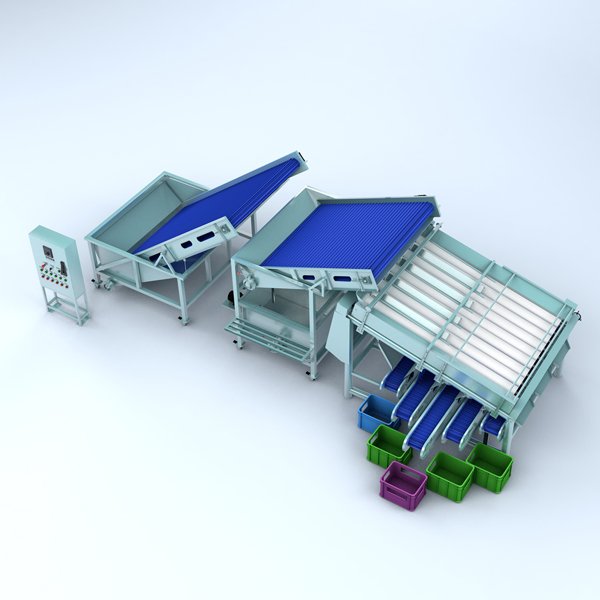
Start with the shrimp size range
The first selection point is the size range of the shrimp entering the grading section. Share the minimum and maximum shrimp size, product condition and target grades so the roller arrangement and outlet configuration can be matched to the process.
Match capacity to the complete line
Grader capacity should be evaluated together with washing, cooking, pre-cooling, selection conveying and IQF freezing. A machine that is oversized for the upstream flow may be difficult to feed steadily, while an undersized grader can become a bottleneck during peak production.
See our shrimp grading machine landing page for the complete seafood processing solution.
Review feeding and discharge layout
Stable feeding helps the rollers separate shrimp more consistently. Confirm the available infeed height, discharge direction, number of grading outlets and the space needed for operators to inspect and clean the machine. These details are especially important when the grader is installed in an export-oriented cooked shrimp line.
Our cooked prawn processing line shows how grading can be combined with washing, cooking, cooling and IQF freezing.
Check hygiene and maintenance access
Food-contact surfaces, guards, rollers and collection outlets should be easy to access during daily sanitation. Ask for the cleaning procedure, drainage arrangement and recommended inspection points before confirming the final layout.
Information to include in an inquiry
- Shrimp species and product condition.
- Size range and required number of grades.
- Hourly capacity and working hours.
- Upstream and downstream equipment.
- Available floor space and preferred discharge direction.
Send the process details through our contact page for a line-based recommendation.